
The surface finishes for PU Stone Panel – Which One Is Right for You?
Compare film lamination vs in-mold painting for faux stone panels. Learn which finish lasts 20+ years outdoors and which fits your budget. Quick, clear, actionable.
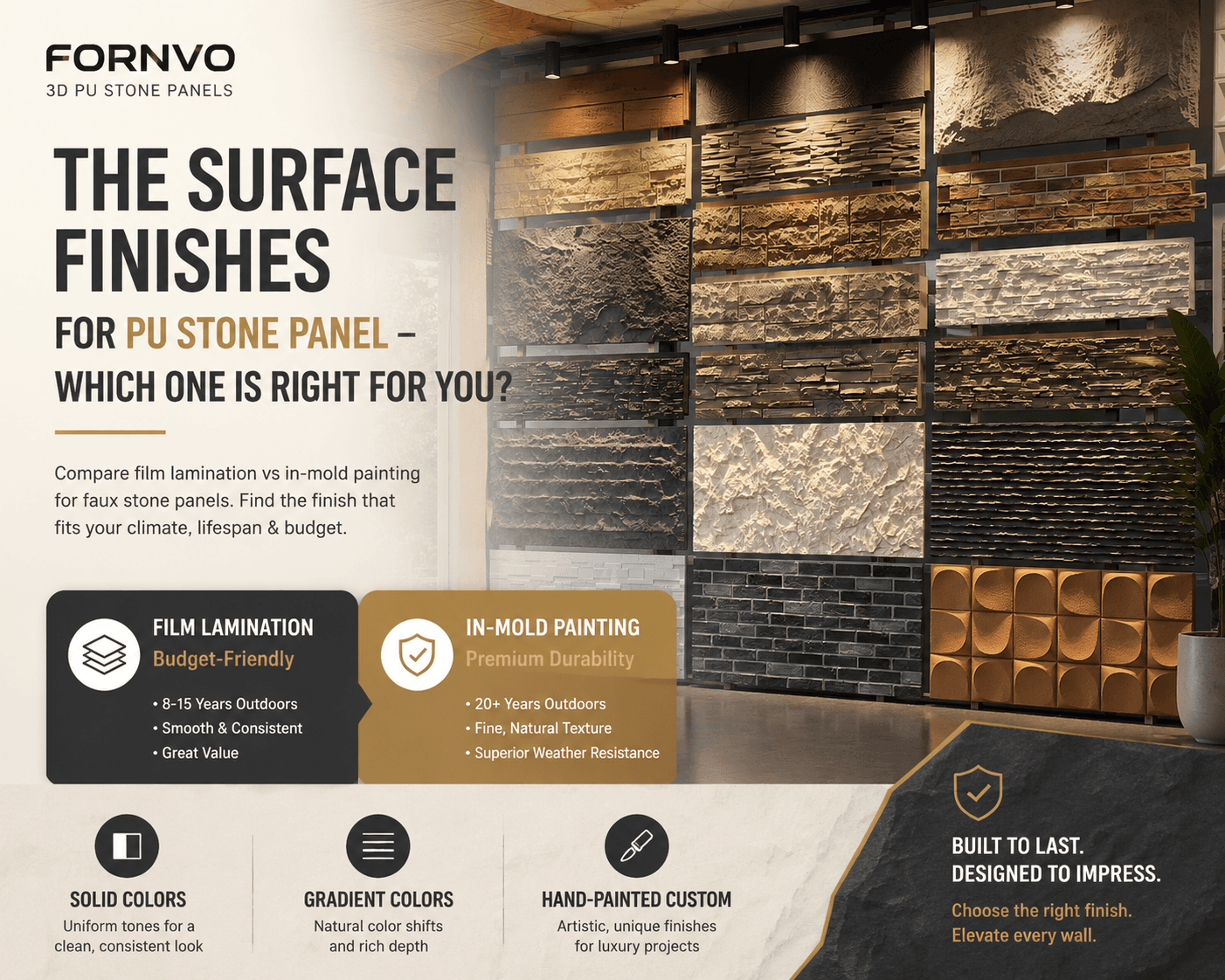
Selecting a PU stone panel finish isn't just about color and style. The wall panel's surface finish affects texture, durability, and total cost.
This guide compares two core processes and three color tiers of the polyurethane artificial stone panel, so you can match the right panel to your project's requirements, such as condition, climate, lifespan, and budget.
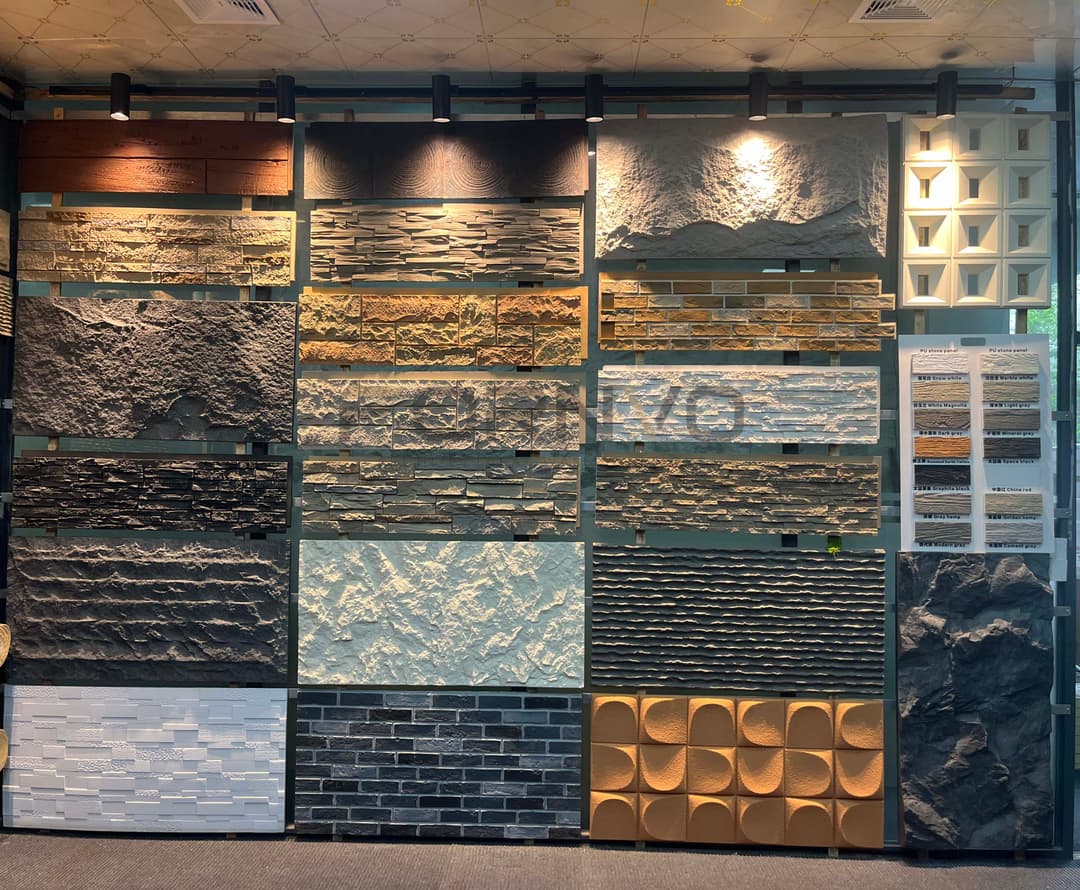
Two Surface Finish Technologies
1. PVC Film Lamination (Budget-Friendly)
Process: The surface is laminated with a PVC film and then spray-painted. This process is stable, highly efficient, and offers excellent cost-effectiveness.
Although the texture definition is slightly inferior to that of in-mold painting, the visual appearance remains impressive.
Best for: Interior walls, covered patios, and exteriors under eaves.
Lifespan: 8-15 years outdoors. (Depends on condition)
Texture: Smooth and consistent, suitable for modern minimalism.
Choose this if: You have a regular budget and a shorter-term project.
2. In-Mold Painting (Premium Durability)
Process: The color coating and substrate are molded together in a single step, ensuring the surface coating fuses perfectly with the base material to create a fine, natural texture.
A protective topcoat is subsequently applied to ensure superior weather resistance.
Best for: Full facades, harsh sun, extreme temperatures, or seaside locations.
Lifespan: 20+ years outdoors.
Texture: Fine, natural stone grain with micro-porosity.
Choose this if: Your building is a permanent investment and replacement costs are higher than the PVC lamination.
Coloring process – Three Tiers to Suit Every Design
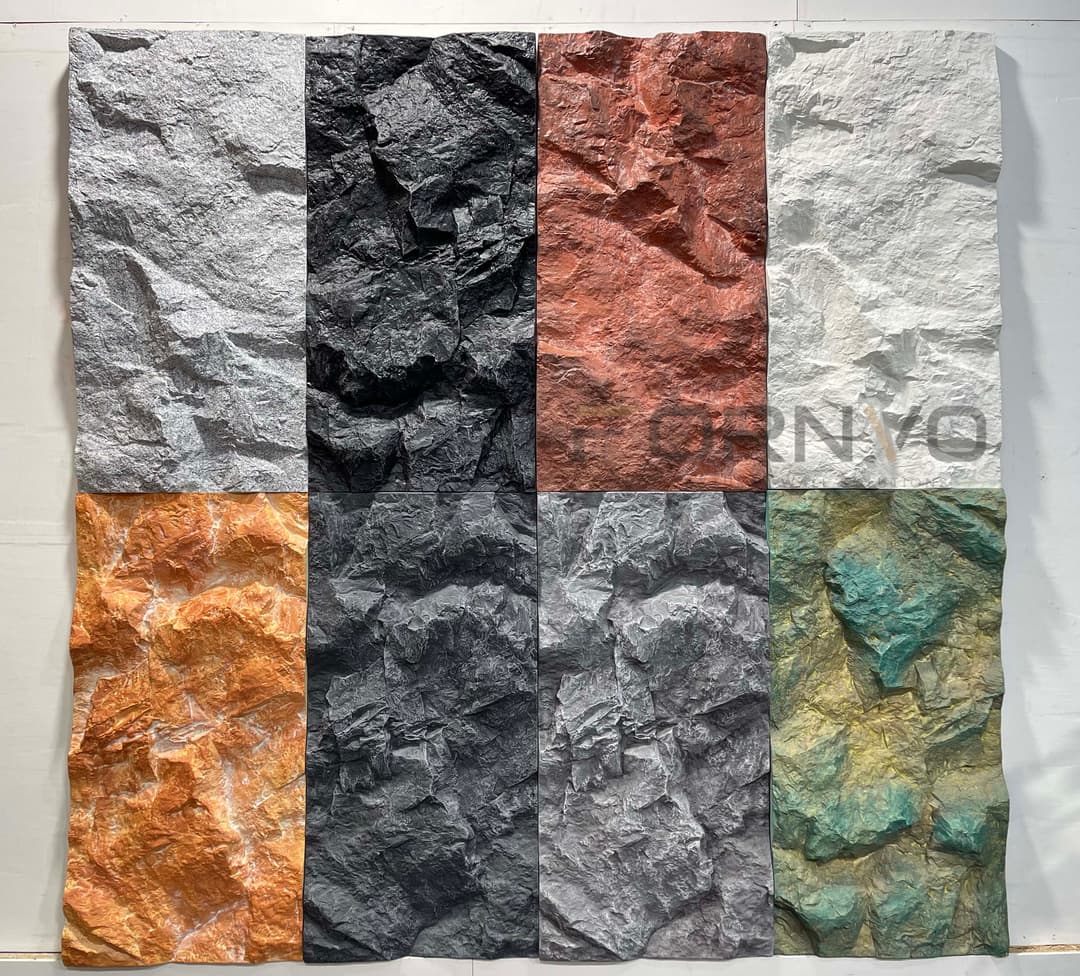
Solid Colors – Uniform tones (black, white, cement grey). Perfect for large-volume projects where consistency matters.
Gradient Colors – Multi-tonal layering creates natural color shifts and depth, mimicking real stone.
Hand-Painted Custom – Artisans hand-blend pigments for unique textures and artistic variations. Ideal for luxury interiors or landmark projects where no two panels are alike.
How to Choose the Right Finish
Both Film Lamination and In-Mold Painting can be used for interior and exterior applications. The main difference is their expected outdoor service life and cost.
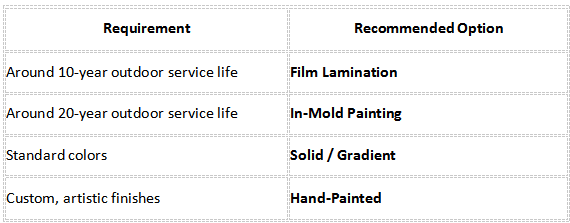
These are general recommendations. The final finishing and coloring process can be selected according to the project requirements, expected service life, design preferences, and budget.
Quick FAQ
Q: Can Film-laminated panels go outdoors?
A: Yes, but only in shaded areas. For full sun or rain, upgrade to In-Mold.
Q: Are hand-painted panels worth the extra cost?
A: For premium, custom aesthetics – absolutely. They offer unlimited color matching that standard gradients can't.
Q: How to clean both finishes?
A: A soft cloth with clean water. Avoid abrasive tools on Film surfaces.
Ready to Choose Your Panels?
Whether you need cost-effective 3D PU wall panels for a quick renovation or premium custom cladding for a prestige build, please contact us.
FORNVO matches the right finish and color to your project.
Continue reading
What Is MCM Flexible Stone? A Guide to Soft Stone Wall Cladding
Discover MCM Flexible Stone, a lightweight and flexible wall cladding solution with natural stone textures, ideal for interior, exterior and curved surfaces.
PU Stone Panels vs Natural Stone: Which Is Better for Modern Construction?
PU Stone Panels vs Natural Stone: compare weight, price, installation, design options, and outdoor applications to choose the best lightweight stone wall solution.
PU Stone Panels Selection Guide: 6 Factors to Match Your Project
PU stone panels selection guide for construction & interior projects. Discover critical tips on texture, color, panel size, installation, and custom options to maximize design and durability.